Make It Easy

Justin Hall

4 Lessons Mister Rogers Taught Me About Teaching

Christian Shockley

A Few Hot Takes on AI

Mark Johnson

How to Know if Your Course Is Well-Designed

Christian Shockley

Stop Stealing My Attention

Justin Hall

4 Ways to Engage Learners in Your Course Introduction

Christian Shockley

How to Design for Community Through Online Cohorts

Christian Shockley

How to Grow Your Online Course with Word of Mouth

Paul Johnson

How to Host a Virtual Event on Pathwright

Christian Shockley

Why We Threw out our Roadmap and Started a Lab

Paul Johnson

Blue Flower

Don’t Sell Your Company Before You’ve Built It

Paul Johnson

Deeper Learning at a Distance

Pathwright Team

Building Relationships and Opportunities

Pathwright Team

Teachers Helping Teachers Help Students

Pathwright Team

Doctors Read Children’s Stories on Social Media

Pathwright Team

One Voice: A Black History Narrative

Pathwright Team

A Fresh Outlook on Teaching Media

Pathwright Team

The Secret to Creative Work

Justin Hall

The 3 Phases Every Design Project Encounters

Justin Hall

We’re Not Here to Change the World

Paul Johnson

5 Reasons Why We Work in 6-Week Cycles

Paul Johnson

Blocks, not Pages, Are the Future of the Web

Mark Johnson

LMS Forums Are Broken

Paul Johnson

Content Marketing Is Not Teaching

Mark Johnson

Why Teachers Should Give Questions, Not Answers

Christian Shockley

Why We Design for the Learner First

Mark Johnson

Learning Should Be Beautiful

Christian Shockley

How I Accidentally Launched a Business / Startup

Paul Johnson

The Shape of Learning

Paul Johnson

Sidebars are a learning ”dark pattern“ plaguing online courses everywhere

Paul Johnson

Why Is Your School’s LMS so Bad?

Mark Johnson

How to Write Discussion Questions

Christian Shockley

4 Things David Foster Wallace Taught Me About Teaching

Christian Shockley

Sidebars are a learning ”dark pattern“ plaguing online courses everywhere

Sidebars are a learning ”dark pattern“ plaguing online courses everywhere

Paul Johnson

If you’ve ever taken an online course, you’ve come across this interface design pattern:

People often ask why courses in Pathwright don’t have a sidebar. A fair question.

I’ll share two reasons why I think it’s time for course designers to break up with their sidebars.


1) Sidebars make it harder to learn

Whenever we learn something new, our brain uses all our available mental energy on that task. We call this kind of mental energy “working memory.”

Psychologists quantify how much working memory is required to learn a concept as “cognitive load.” Higher cognitive load = harder to learn.

If we want to get super-nerdy, we can break it down further to a formula:

Cognitive load = Innate load + Germane load + Extraneous load.


Now here’s what that means in plain English:

  • Innate load increases with the complexity of the concept itself. We could think of innate load as the “file size” for an app we’re installing into our brain (e.g., mixing cooking ingredients is small while deciphering a physics equation is big).

  • Germane load is the difficulty of integrating the new concept with what we already know. It’s like the processing power required to “install” that file in our brain.

  • Extraneous load is everything else distracting us from learning the concept.

Skilled teachers and LX designers use techniques to subtract strain on our learners by reducing each load—that’s a good topic for another post. For now, here’s a very important fact to keep in mind about your online course:

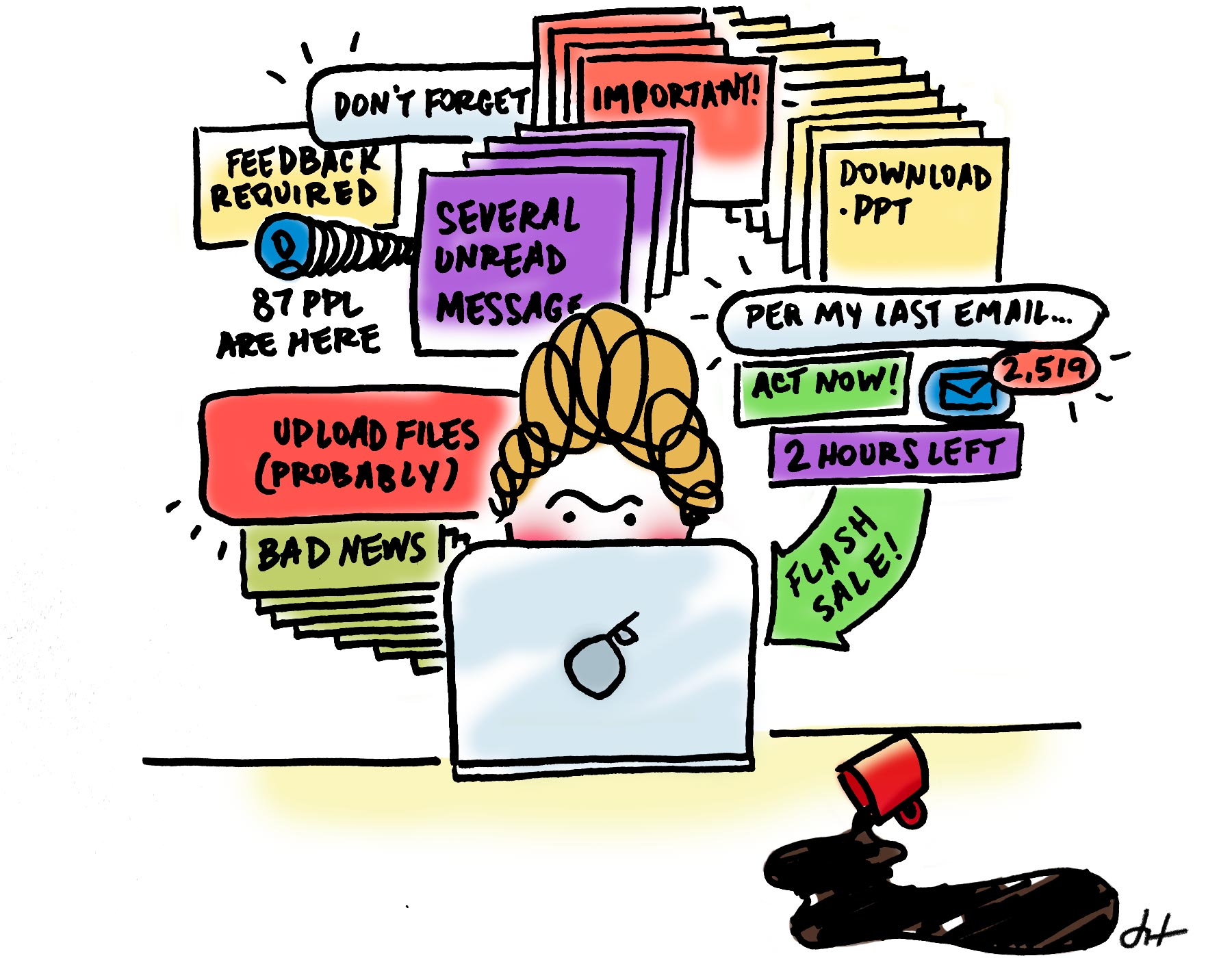
Your learners are already in the most distracting place that’s ever existed: The Internet.

They’re only a tap, click, or notification away from everything other than what you’re teaching. Extraneous load is sky high.

With this in mind, I try to hunt down and kill extraneous load wherever I find it in Pathwright's UI. If it’s not essential, it gets axed. So even though course sidebars may be the cool kid everywhere else, they don’t cut here.

But isn’t that a little harsh? Can’t our learners ignore the sidebar while they’re reading, watching, etc.? Sure, they can, but that sidebar is still acting like the annoying kid whispering in the back of the class during a test. If your online course has a sidebar, it’s whispering to your learners:

😈 “Pssst. Is that quiz too hard right now? I got you. Why not check out something else for a little while?”

A lurking sidebar is an invitation to stop learning. It steals away your learner’s scarce cognitive load from your teaching. It’s a small thing, but the devil is in the details.

2) A course is more than organized content

“Dress for success.” “You are what you wear.” We know that how we dress says something about us to other people, even when it’s unfair or inaccurate. Here’s what dressing up your course with a sidebar says about your course:

😈 “Shop around! Check out this menu of shiny options over here. You can pick whatever you want, anytime.”

The problem here is that order matters in an effective course. Learning requires connecting past knowledge with new knowledge progressively. Give your learners an ever-present chance to skip around, and they’ll miss those essential connections.

😈 “It’s all about the content. It’s so good. I’m gonna keep it in your face all the time.”

But learning isn’t about content. It’s about absorbing, reflecting, practicing, observing, doing, reviewing, etc. — all actions connected in an intentionally designed sequence (or, ahem, a “path”). If an online course is dressed up like it’s all about the content, it’s easy to forget about following a path altogether.


The 😈 devil is in the details. 

Interface design for online education is in its infancy. We have a lot more work to do, and breaking up with course sidebars is just a small step.

Unfortunately, many good interface designers combine popular UI patterns that work great for exploring an online store or blog without considering how those patterns impact learning.

At Pathwright, we don’t get everything right either. But we start by taking a design approach that begins with what’s best for you as a teacher and for your learners—not what’s expected or popular.

If you’d like to try out the difference for yourself, you can start creating an online course for free right now.